


Weekly Market Report - July 15, 2025
***
Developers turn their backs on former Gov. Andrew Cuomo and host fundraisers for incumbent mayor
New York City real-estate executives are financially backing incumbent Mayor Eric Adams to block Democratic mayoral nominee Zohran Mamdani, who campaigned on a rent freeze to solve the city's housing crisis. The growing industry support for Adams, who is running for re-election on his own ballot lines, marks a pivot from only weeks ago when the real-estate business mostly backed former Democratic New York Gov. Andrew Cuomo. The real-estate community sees Adams as their best bet for blocking Mamdani's path to City Hall. Mamdani has failed to attract developer support, and industry leaders remain deeply skeptical. The property industry has been happy with Adams's pro-development policies, but hasn't supported a rent freeze. The real-estate community is stepping up to support Mayor Adams.
***
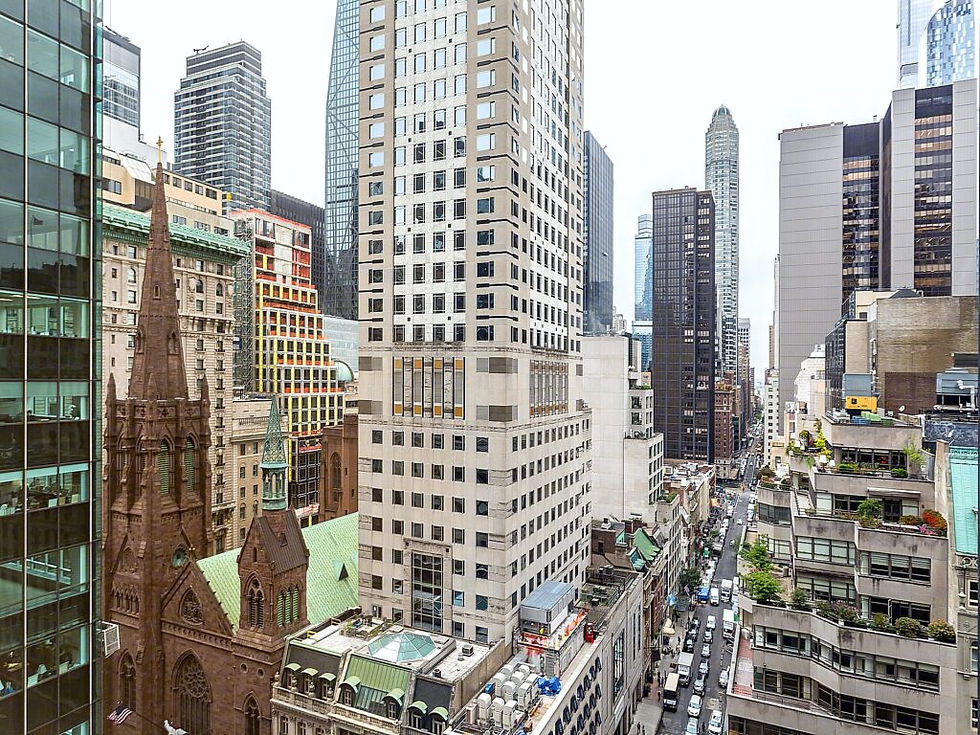
Extell Development plans to expand its 655 Madison Ave. office building by constructing a 74-story tower, spanning 765,000 square feet and 1,162 feet tall. The project, which includes 154 residential units, is expected to improve the Fifth Avenue/59th Street N/R/W subway station in exchange for additional space. The residential space will be 476,000 square feet, while the commercial space will be 233,000 square feet, divided between retail and office space. Extell also plans to transfer floor area from the Metropolitan Club, a historic 1891 luxury hotel and private club, to its development site. If the rezoning is not approved, the building could be 84 stories tall with less residential and office space.
***
Soho House New York, the parent company of the exclusive club, has never reported a profitable year and its stock price is down to $7.50 a share. However, business seems to be booming for the landlord of the exclusive club's flagship Manhattan outpost, billionaire investor Joseph Cayre. Cayre collects about $100 per square foot in rent from Soho House, or $7 million a year, according to a new report from credit-rating agency KBRA. He recently relayed a year's worth of rent to UBS and agreed to put up a $7 million down payment to refinance the 90,000 square foot property's $135 million mortgage.
The lease for Soho House New York continues through 2034, and the club has more than 10,000 members plus a waitlist of more than 1,000. Members pay dues starting at $3,200 a year, plus a $1,100 initiation fee, for entry to a converted warehouse near the Whitney Museum. Soho House's future as a business is far from certain, as the London-based company has never had a profitable year since inception in 1995 and last year piled up $70 million in operating losses due
***
A state judge has granted developer Charles Cohen more time to sell buildings from his Midtown office portfolio to pay nearly $200 million owed to his lender, Fortress Credit Corp. Cohen is seeking to sell three buildings – 623 Fifth Ave., 3 E. 54th St., and 622 Third Ave. – after the judge ruled in March that Cohen was personally on the hook to repay $187 million worth of defaulted property loans. Cohen controls nearly 12 million square feet of commercial space nationally, but many of his Midtown buildings have struggled to retain tenants.
Cohen's representatives have held at least 12 meetings with six potential buyers in the last three months for the Midtown buildings. Cohen's net worth has fallen to $1.6 billion, with Forbes estimates it has since fallen to $2.9 billion. Cohen's assets include a 135-acre vineyard in France called Chateau De Chausse and the Quad Cinema in Greenwich Village. Cohen's 2023 document said his net worth was $2.9 billion, but Forbes estimates it has since fallen to $1.6 billion.
***
The Chetrit Group, along with developers Joseph Moinian and Edward J. Minskoff, is facing a lawsuit from Corebridge Financial subsidiaries for defaulting on a $375 million loan for an office tower in the Garment District. The developers received a massive refinancing package in May 2018, but failed to repay the debt. The lawsuit also accuses the Chetrit Group of being behind on rent dating back to January 2023 for about $1 million. The building was also allegedly behind on more than $2 million worth of payments to Con Edison, sparking the utility company to threaten cutting off its electricity.
The lawsuit claims that the developers did not repay the debt immediately. The Chetrit Group is still focused on the building for the long-term and is working on a refinancing solution. The property's tenants include WeWork, which occupies almost 200,000 square feet across five floors. The Chetrit Group has faced several lenders for foreclosure, including the loss of the Hotel Bossert in Brooklyn Heights and a legal dispute with the family of his brother Jacob Chetrit.
***
The Helmsley Building in Midtown has experienced a 44% vacancy rate since it went into foreclosure last December. Major tenants, including Voya Financial, Clarion Partners, and Dentons, have left the 34-story, 1.4 million square-foot building, which has unmatched views north along Park Avenue. The tower next to Grand Central Terminal was 20% vacant at the end of 2024 when lenders filed to foreclose. Developer BXP plans to build a $2 billion office tower next to the Helmsley, a bold bet on continuing demand for prime Park Avenue office space.
The Helmsley's financial woes are deepening, with its loan exposure rising to $690 million from $685 million this year. The building was valued at $770 million before lenders put it in foreclosure, equal to about half the price paid in 2015 by RXR Realty. Real estate experts say the Helmsley is at risk of becoming a "zombie" property, which doesn't generate enough cash to pay bills. The property's "net recovery value" is estimated to be about $675 million. The Helmsley has a colorful history among New York office buildings, having been the longtime home of billionaire owner Leona Helmsley.
***
The Shops at Skyview is fully leased
Blackstone is selling The Shops at Skyview in Flushing, a 550,000 square foot retail complex in Queens, to a different owner. The property, anchored by a grocery store, spans 550,000 square feet and is fully leased. Tenants include BJ's Wholesale Club, Sky Zone, Marshalls, Sky Foods, and Burlington. The property is part of a larger 3 million-square-foot complex that includes 1,200 apartments and 50,000 square feet of medical space. The property is expected to be sold for around $425 million, with institutional investors, wealthy individuals, and foreign investors expected to bid on the property.
A Newmark team is marketing the property, and both Blackstone and Newmark declined to comment. The property was purchased by Blackstone in 2015 from Onex Real Estate Partners for $400 million. In 2021, Morgan Stanley originated a $285 million loan for the property, which was securitized into a single-asset commercial-mortgage backed securities transaction. Blackstone agreed to contribute an additional $45 million in equity to the deal.
***
Developer files plans for 382 units at 40 Exchange Place
GFP is planning to convert a 240,000-square-foot office building at 40 Exchange Place into mixed-use, constructing 382 residential units and retail space. The 19th-century building, currently used as offices, has been rented out by several tenants and leased to A360 Media in 2023. The building was purchased by GFP and Northwind Group in 2015 for $115 million and renovated to $20 million. Northwind sold its stake to GFP in 2018, but did not abandon the property. GFP has experience in converting old office buildings into apartments, having partnered with Metro Loft and Rockwood Capital on the largest conversion in the country.
In January, GFP and its partner TPG Real Estate secured a $288 million construction loan for an office-to-residential conversion project at 222 Broadway. Office-to-residential conversions are popular in the Financial District due to declining space needs and tenants' desire for high-quality spaces. Developers are also utilizing the city's 467m program, which offers a 35-year tax abatement in exchange for 25% of apartments being earmarked for affordable housing.
***
About 14 percent of spaces were available in prime districts
New York's retail leasing market is experiencing tightening conditions, with vacancies in Manhattan's prime retail corridors reaching their lowest number since JLL began releasing quarterly data on the metric in 2017. About 14% of retail spaces in these areas were available in the second quarter of 2025, a drop of just over a percentage point year over year. Asking rents in these areas have not fully recovered, but they reached an average of $608 per square foot last quarter, the highest number since the summer of 2020 and an 11% year-over-year jump. The prime retail areas include Times, Union, Herald Squares, Fifth Avenue, Madison Avenue, Soho, and the Meatpacking District.
The lowest availability was found on Madison Avenue and in Soho, with 9.6 and 10.6 percent of spaces available, respectively. Madison Avenue saw the largest decline in average asking rents, falling 14% year over year to $835 per square foot. Soho, where rents are much cheaper, saw a 19% rise in average asking rent year over year to $351 per square foot. Herald Square saw the highest vacancy rate, with 35% of spaces available. The Times Square area saw the biggest jump in average asking rents, with 19.3% of spaces remaining vacant.
***
Developer puts vacant former HFZ site at 3 West 29th St. up for sale, could clear $250M
Vanbarton Group is preparing to market its site at 3 West 29th Street in Nomad, acquired via foreclosure in 2021. The property, which could potentially yield 700,000 square feet of residential use, could be one of the first major developments to move forward under Mayor Eric Adams' planned Midtown South rezoning. The project, which is expected to be approved later this summer, could be one of the first major developments to move forward under the rezoning. The property, which was previously owned by Ziel Feldman's HFZ Capital, was complicated by the church's partnership with HFZ and its stake in the development.
The two sides reached a settlement, and Vanbarton decided to move forward with the development, initially considering an office tower and then a life-sciences building. However, the Adams administration announced a plan to rezone Midtown South for more housing, estimating the overhaul will create 10,000 new units. The City Planning Commission approved the plan, which is set to be voted on by the City Council by the end of the summer. Under the rezoning, Vanbarton's West 29th Street site will be greenlit for residential use. The developer is one of the most active companies in the office-to-residential conversion space, with five projects underway in Manhattan totaling more than 2,200 units.
***
Joseph Fingerman on lessons from the bank failure and trying to turn New Jersey-based Peapack into the CRE go-to
Peapack Private Bank & Trust is aiming to capitalize on the lending void left by Signature Bank's 2023 collapse. Former Signature executive Joseph Fingerman, who led Signature's $33 billion commercial real estate loan book, said the bank run began on March 9, 2023, and was a definite overreach of the FDIC's authority. The bank run began on March 12, and Signature Bank collapsed three days later, becoming the second-largest bank failure in U.S. history. The bank's demise was not rooted in its CRE portfolio but in its $16.52 billion in cryptocurrency exposure, which led to a deposit flight after Silicon Valley Bank's historic failure.
Peapack CEO Douglas Kennedy saw potential in the chaos and recruited Fingerman. In March, Peapack opened its Manhattan office with 6,000 square feet for private banking and 18,000 square feet of office space. Peapack's loan book has grown to $6 billion, with roughly $2.5 billion earmarked in commercial real estate loans across the New York metro area and New Jersey. The bank focuses on family offices that own about 10 properties and targets multifamily, retail, industrial, and mixed-use properties throughout the New York metro area. Andrew Corrado, former head of commercial and private banking at Signature, is part of the revamped Peapack, along with 100 other employees from Signature and First Republic.
***
Fastest growing sport in the nation takes 14k sf at 160 Van Brunt
Velto Pickleball Club has secured a 14,000 square foot lease at 160 Van Brunt Street in Red Hook, a converted industrial building developed by LIVWRK and FM Capital. The membership-based club will have four full-sized and one half-sized courts and is spending over $1 million to build out the space. The converted building was formerly home to the Golten Marine Terminal and was purchased by LIVWRK for $21.5 million in 2014, converting it into an office and retail space.
Tesla signed a lease in 2016 for a 40,000-square-foot showroom and service center on the ground floor of the property, marking its first entry into Brooklyn. Tesla later inked a deal for an additional 6,500 square feet above. Pickleball is also gaining popularity in the borough, with CityPickle opening a 60,000-square-foot complex with 11 courts under the Brooklyn Bridge this fall, Goodland Pickleball opening an indoor court at Pearl Realty Management's 67 West Street in Greenpoint, and PKLYN opening a five court, 18,000-square-foot facility at 80 Fourth Street in Gowanus last fall.
***
Cain International in talks to buy former Trump Soho property
CIM Group is in talks to acquire the Dominick hotel in Manhattan, which was once the Trump Soho Hotel Condominium. The deal, reportedly close to completion, would cost Cain International over $175 million for the 391-key property. The Dominick was acquired through foreclosure in 2014 and rebranded in 2017 after ending a licensing agreement with the Trump Organization. CIM has considered selling the hotel twice in recent years. Cain International, a venture between Jonathan Goldstein and Eldridge Industries, has been involved in financing Aman New York and redeveloping prestigious properties like the Beverly Hilton and Delano Miami Beach.
It is also partnering with Mubadala Investment's alternative asset management subsidiary on luxury real estate acquisitions. In April, OKO Group and Cain International proposed a three-building condo complex in Palm Beach, the first new condo proposal on the island in nearly 20 years. The hotel market in Manhattan has tightened in recent years due to a 2021 City Council bill that requires a special permit for new hotel developments. Since 2019, the city has lost 6,000 hotel rooms, half of which were in Manhattan, and thousands were converted into migrant housing.
***
Company signs 60K sf lease at 250 Broadway, its first since 2019
WeWork has signed a 60,000 square foot lease at AmTrust RE's 250 Broadway in Lower Manhattan, marking its first new lease in the city since 2019. The company, which operates over 3 million square feet in New York, plans to open the space at the end of this year. The city is considered a critical launchpad for WeWork's new era of strategic growth. WeWork exited bankruptcy proceedings a year ago, slashing $4 billion in debt, adding an equity partner in Yardi Systems, and revamping its C-suite with Cushman & Wakefield veteran Santora at the helm.
The lease terms were not disclosed, but the tenant was represented by a JLL team including Peter Riguardi and Clark Finney. The 250 Broadway location will include a coworking lounge, meeting rooms, private offices, a wellness room, a mothers' room, and WeWork's typical amenities, services, and community-building events. The property initially held the winning bid for a lease to the Department for the Aging, but was later transferred to Alexander Rovt's 14 Wall Street in an alleged scheme to favor the prominent donor to Mayor Eric Adams. WeWork plans to invest $80 million to $100 million across its global portfolio this year, including nearly 600 locations spanning 45 million square feet.
***
Columbia University, New York City's largest private landlord, is facing financial attacks from President Donald Trump's administration, including federal funding freezes and heightened taxes. The university has a shield of at least 245 properties and a $14.8B endowment war chest, protecting it from potential financial losses. However, its liquidity-constrained peers, such as Harvard and Columbia, have been left more vulnerable due to Trump's executive orders, threats to strip schools of accreditations, tax exemptions, and freezed federal funding. The One Big Beautiful Bill introduced a tax structure based on private schools' "student-adjusted endowment," raising the existing flat 1.4% excise tax to up to 8% for some schools.
Schools in New York City are pursuing higher education, despite funding threats, as first-time postsecondary enrollment has rebounded. In 2024, enrollment increased 4.5% year-over-year, surpassing pre-pandemic levels. Financially strained schools may have to outsource space or consider leaseback agreements. Creative transactions like ground leases or air rights transfers may help raise capital for schools. Columbia University, a major player in New York City's built environment, has faced backlash from Harlem activists and politicians over its community benefits agreements.
***
The second-quarter vacancy rate of 7.1% reported by Cushman & Wakefield was up from 6.1% a year earlier
The U.S. warehouse vacancy rate reached 7.1% in the second quarter, the highest in 11 years, due to trade policy changes. The average warehouse vacancy rate across the U.S. increased from 6.9% in the previous quarter and 6.1% a year earlier, according to a report from commercial real-estate services firm Cushman & Wakefield. This marks the first time the vacancy rate surpassed 7% since 2014, as businesses rushed extra inventory into their existing warehouses and paused decision-making during the Trump administration's tariff rollout.
The industrial real-estate sector has struggled for three years with rising availability due to weak demand and an influx of newly built space. The amount of U.S. warehouse space listed for sublease reached a record high of more than 225 million square feet in the second quarter, up 25% from the same period a year earlier. Retailers, manufacturers, and wholesalers have been working to cut back on excess space since the pandemic, with the amount of U.S. warehouse space listed for sublease reaching a record high of more than 225 million square feet in the second quarter.


Comments